Ask institutional investors how the global economy looks right now, and you'll get a surprisingly sunny answer. Growth is chugging along, inflation fears are fading, and recession risk has all but vanished from the consensus forecast. It's a classic "no-landing" scenario—the kind that usually makes everyone feel good about their portfolios.
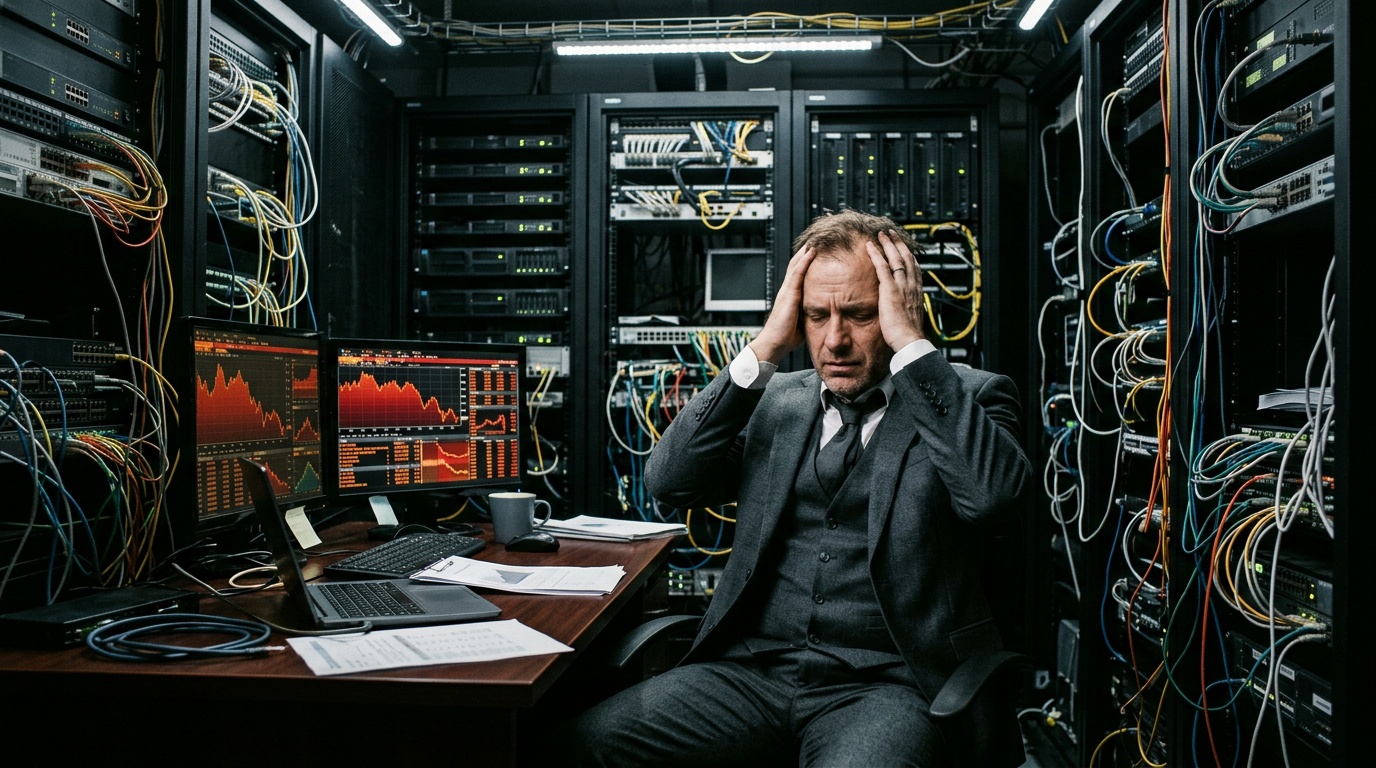
But here's the twist: those same investors are increasingly worried about something that doesn't show up in GDP reports or central bank statements. They're worried about the sheer, mind-boggling amount of money being poured into artificial intelligence.
In Bank of America's July Global Fund Manager Survey, 48% of respondents identified AI hyperscaler capital expenditure as the most likely source of a systemic credit event. That's right—more than the Middle East conflict, more than tariffs, more than a recession. The spending spree by tech giants on data centers, chips, and power infrastructure has become the top fear for nearly half of the world's big-money managers.
The irony is hard to miss. Fund managers are optimistic about the economy while growing increasingly anxious about the very spending cycle that's fueling much of that optimism. It's like being thrilled about a construction boom while worrying the scaffolding might collapse.
Outstanding Spending, Minimal Direct GDP Impact
The survey's macro outlook is remarkably upbeat. A record 54% of respondents expect a no-landing global economy over the next 12 months, while 39% see a soft landing. Only 2% are bracing for a hard landing. Lower oil prices have helped pull down inflation expectations, leaving investors convinced the Federal Reserve can stay on hold rather than resume rate hikes.
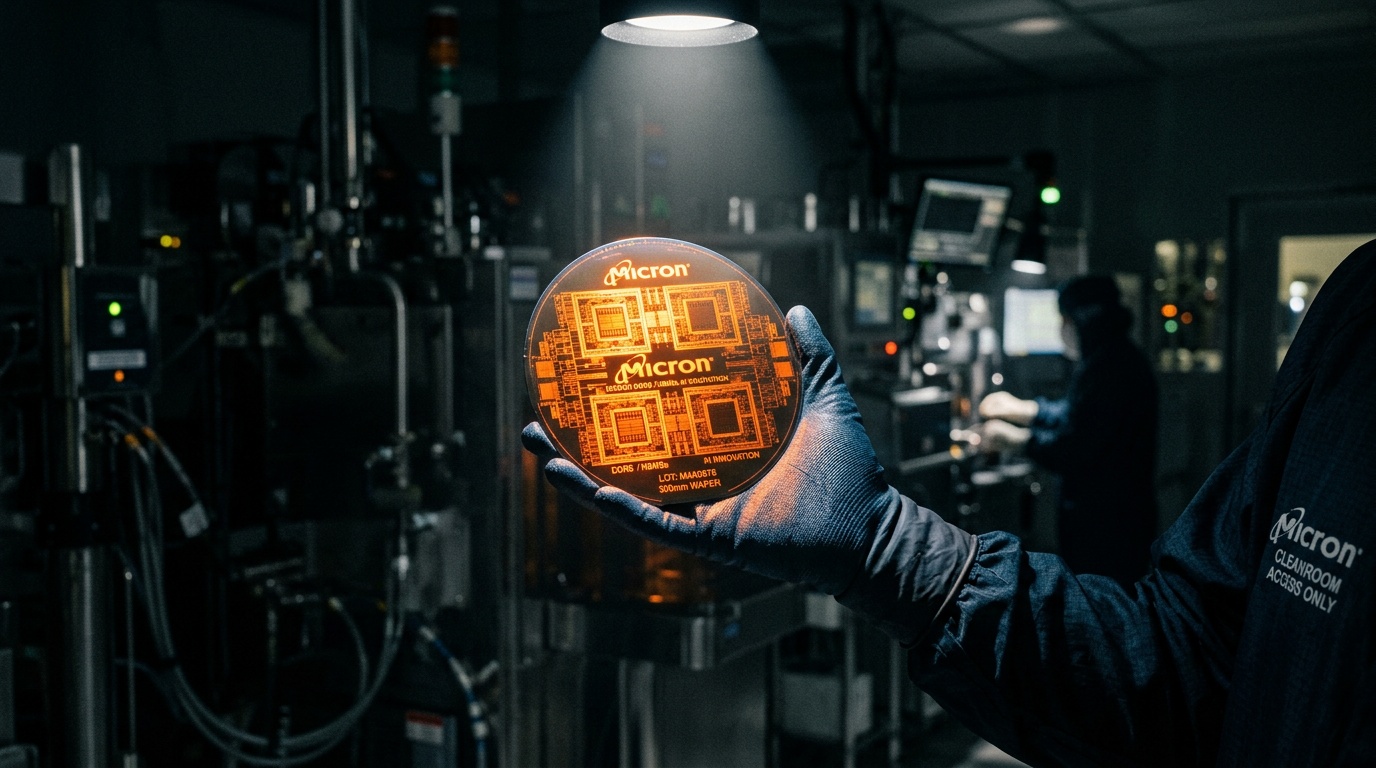
But the AI investment boom is becoming too large to ignore. Goldman Sachs estimates that annualized AI-related spending could exceed $800 billion by the end of 2026, lifting investment in equipment and structures across servers, semiconductors, memory, power infrastructure, and data centers. Yet for all that cash, the direct impact on GDP might be surprisingly modest.
"We estimate that AI-related spending will add 0.3pp to true GDP growth, but only 0.1pp to measured GDP growth in 2026," Goldman economist Elsie Peng noted. So while the spending is enormous, its economic footprint is tiny—which raises the question: if it doesn't show up in GDP, where does it show up? In corporate balance sheets, and potentially in credit markets.
A Crowded Trade
Equity investors have already started to challenge the AI narrative. The iShares Semiconductor ETF (SOXX) has corrected more than 20% from its June peak, meeting the conventional definition of a bear market. Meanwhile, the broader S&P 500 has held up relatively well, suggesting the pain is concentrated in the AI trade.
For BofA survey respondents, that selloff is a meaningful data point. A whopping 82% called long global semiconductors the world's most crowded trade. When everyone is in the same boat, a leak can sink the whole fleet. The correction has exposed fractures within the AI supply chain. Investors are now favoring the most tangible parts of the buildout—chips, memory, servers, and data-center equipment—while punishing downstream software companies whose AI monetization remains uncertain.
A perfect example: International Business Machines Corp. (IBM) reported weak preliminary second-quarter results, and its shares plunged. The company acknowledged it had been slow to adapt to spending shifting away from software and toward servers and chips. Meanwhile, Dell Technologies Inc. (DELL), a supplier of AI servers and storage systems, has been viewed as a potential beneficiary of that rotation. The market is voting with its dollars, and right now, hardware is winning.
The Chain Reaction
The greater risk, however, might lie in credit markets. Corporate spreads remain relatively tight despite the semiconductor selloff, suggesting bond investors haven't yet priced in a material deterioration in AI economics. But that complacency could be tested as second-quarter earnings roll in.
Alphabet Inc. (GOOG) is scheduled to report on July 22, followed by Microsoft Corp. (MSFT) and Meta Platforms Inc. (META) on July 29, and Amazon.com Inc. (AMZN) on July 30. Investors will be scrutinizing whether mounting capex is generating enough cloud, advertising, software, and AI revenue to justify the investment.
If the hyperscalers disappoint, or signal that returns on AI infrastructure remain elusive, the consequences could spread beyond technology equities. Fund managers are light on cash, meaning they don't have much dry powder to cushion a shock. A repricing event could reach leveraged suppliers, data-center projects, private-credit vehicles, and companies approaching refinancing. In other words, the AI spending boom that everyone loves could become the very thing that breaks something.
For now, the market is in a strange place: optimistic about the economy, but terrified of the engine driving that optimism. It's a paradox that will likely resolve only when we see whether all that AI spending actually pays off.






.jpeg)